
A classic card guide—faithfully restored.
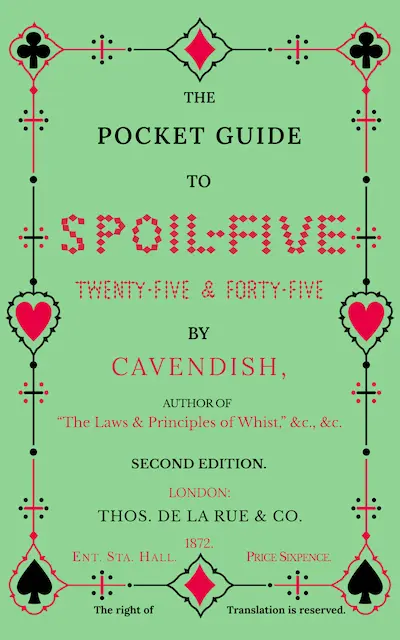
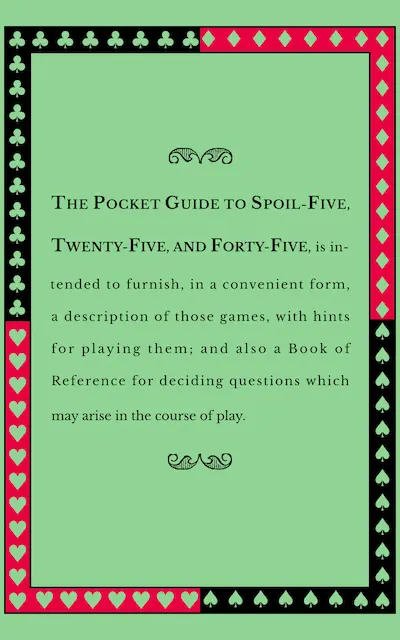
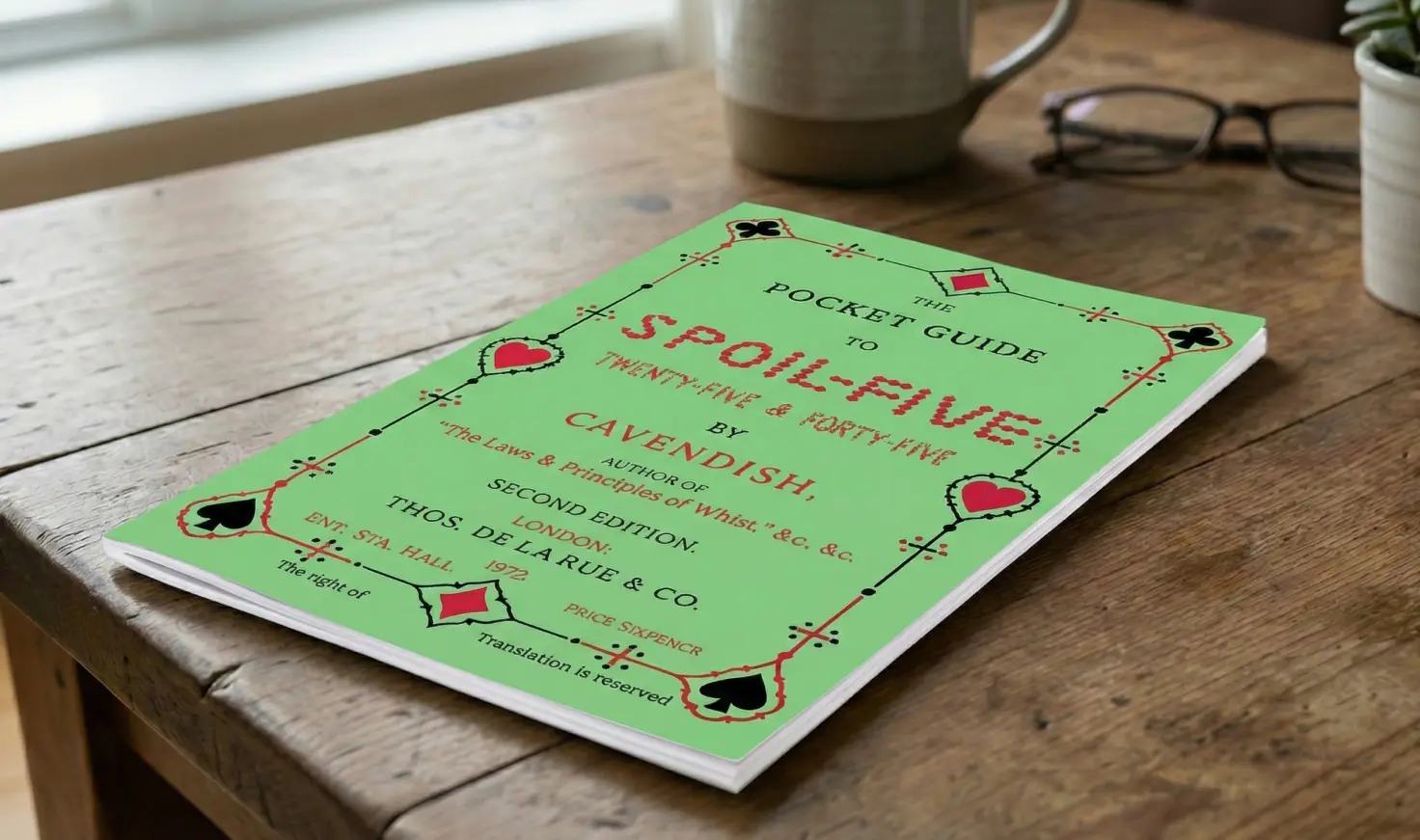
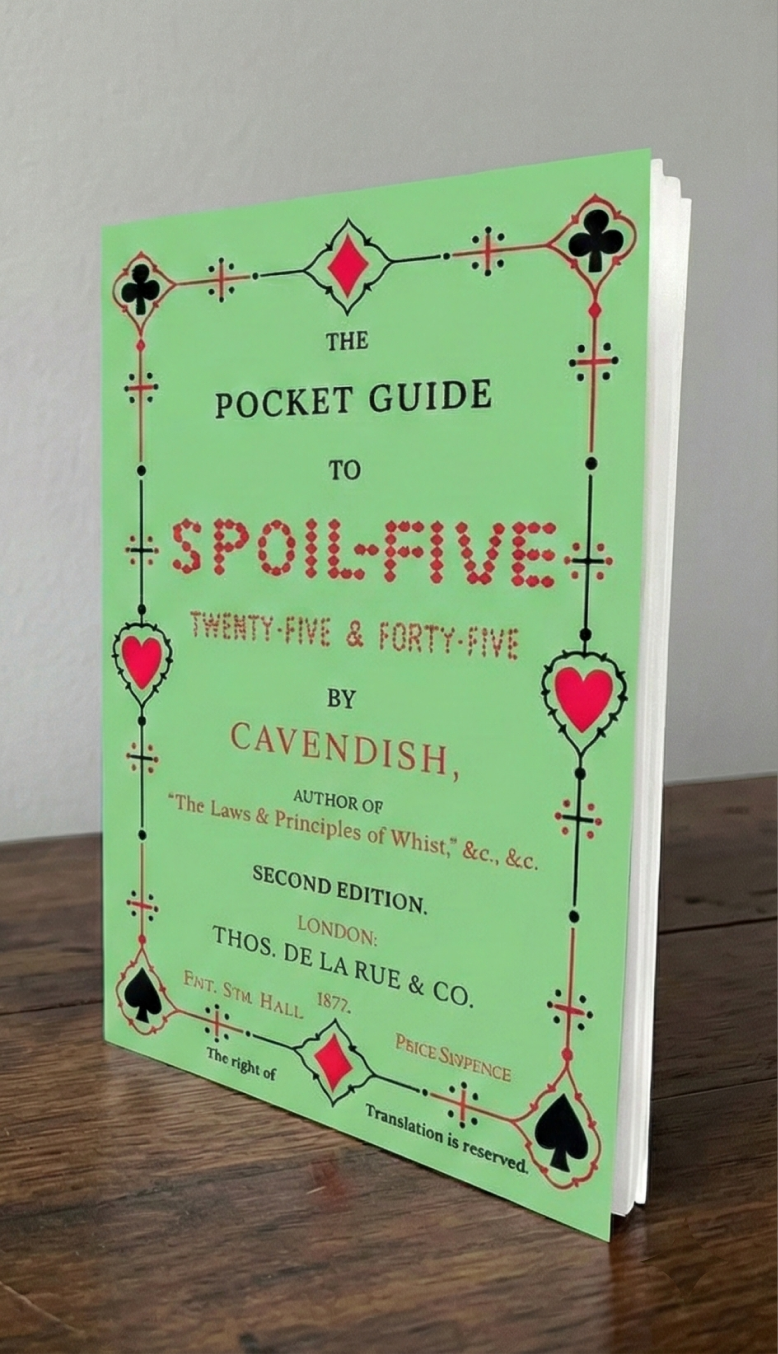
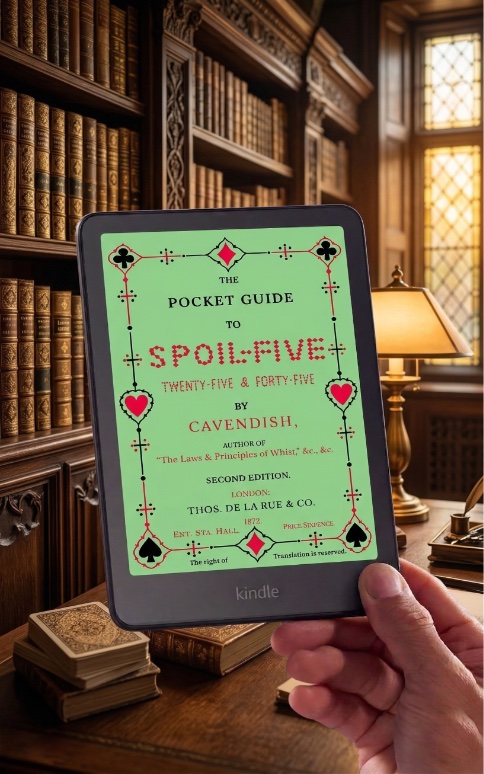
A meticulously reproduced and annotated facsimile of The Pocket Guide to Spoil-Five, Twenty-Five & Forty-Five, originally published in 1872 by Cavendish (Henry Jones).
This edition preserves the original text while adding modern editorial notes that make nineteenth-century rules, terminology, and gameplay practices clear and playable today.
Why this edition?
Many historic card-game books are either modernized beyond recognition or reproduced without explanation. This project takes a different approach:
- Faithful facsimile — Original structure, wording, and intent preserved
- Clear annotations — Editorial notes clarify outdated terms and ambiguous rules
- Playable today — Distinctions between historical and modern practice are explicitly explained
- Respect for source — No rewriting, no reinterpretation—only transparent guidance
The result is a book that works both as a collector’s item and a functional rulebook.
What’s inside
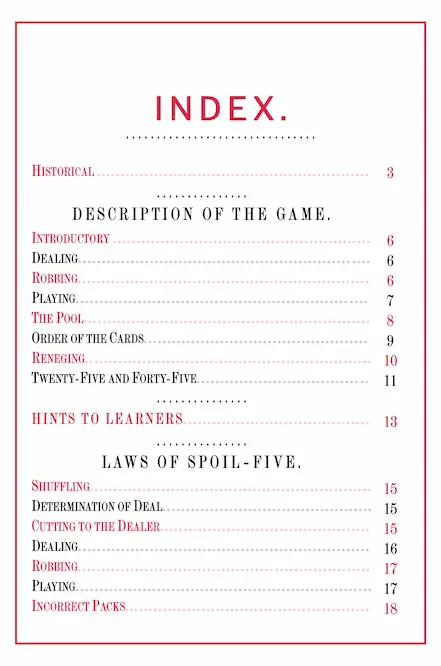
- Authentic rules for Spoil-Five, Twenty-Five, and Forty-Five
- Explanations of period-specific terms and card-playing conventions
- Clarification of mechanics such as dealing, robbing, reneging, and jinking
- Contextual notes on regional and historical rule variations
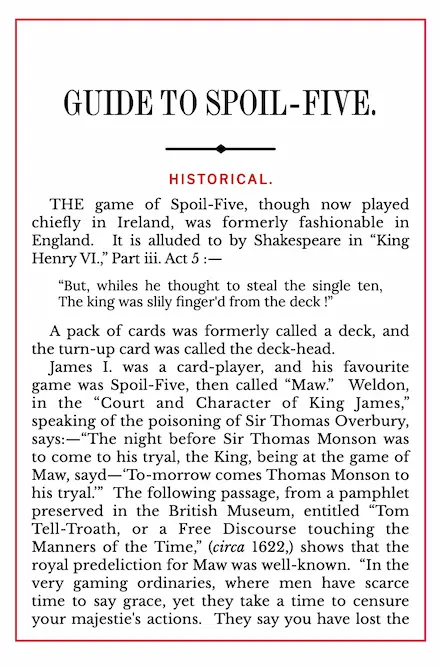
- Literary and historical references, including Shakespeare and King James I
- Illustrated laws and strategic hints for learners and experienced players
Editorial approach
Rather than inserting commentary into the body text, all clarifications are handled through clearly marked annotations. This keeps Cavendish’s voice intact while giving modern readers the tools they need to understand and apply the rules correctly.
Annotations focus on:
- Terminology no longer in common use
- Rule interpretations that changed over time
- Gameplay assumptions obvious to 19th-century players but unclear today
This makes the edition suitable for serious players, historians, and designers interested in early rule systems.
Who this is for
- Card game enthusiasts exploring traditional trick-taking games
- Families reviving older play traditions
- Collectors of historical game literature
- Game designers studying early rule design
- Anyone curious about how modern card games evolved
Format & production
- Compact, table-friendly trim size
- Modern typesetting for readability
- Faithful reproduction of original content
- Printed and bound for regular use—not just display
This is a book meant to be read, referenced, and played from.
Why I made this
I’m interested in systems—especially rules that have survived for generations. This project sits at the intersection of game design, documentation, and preservation, and reflects the same values that guide my software work: clarity, restraint, and respect for history and the user.
Gallery